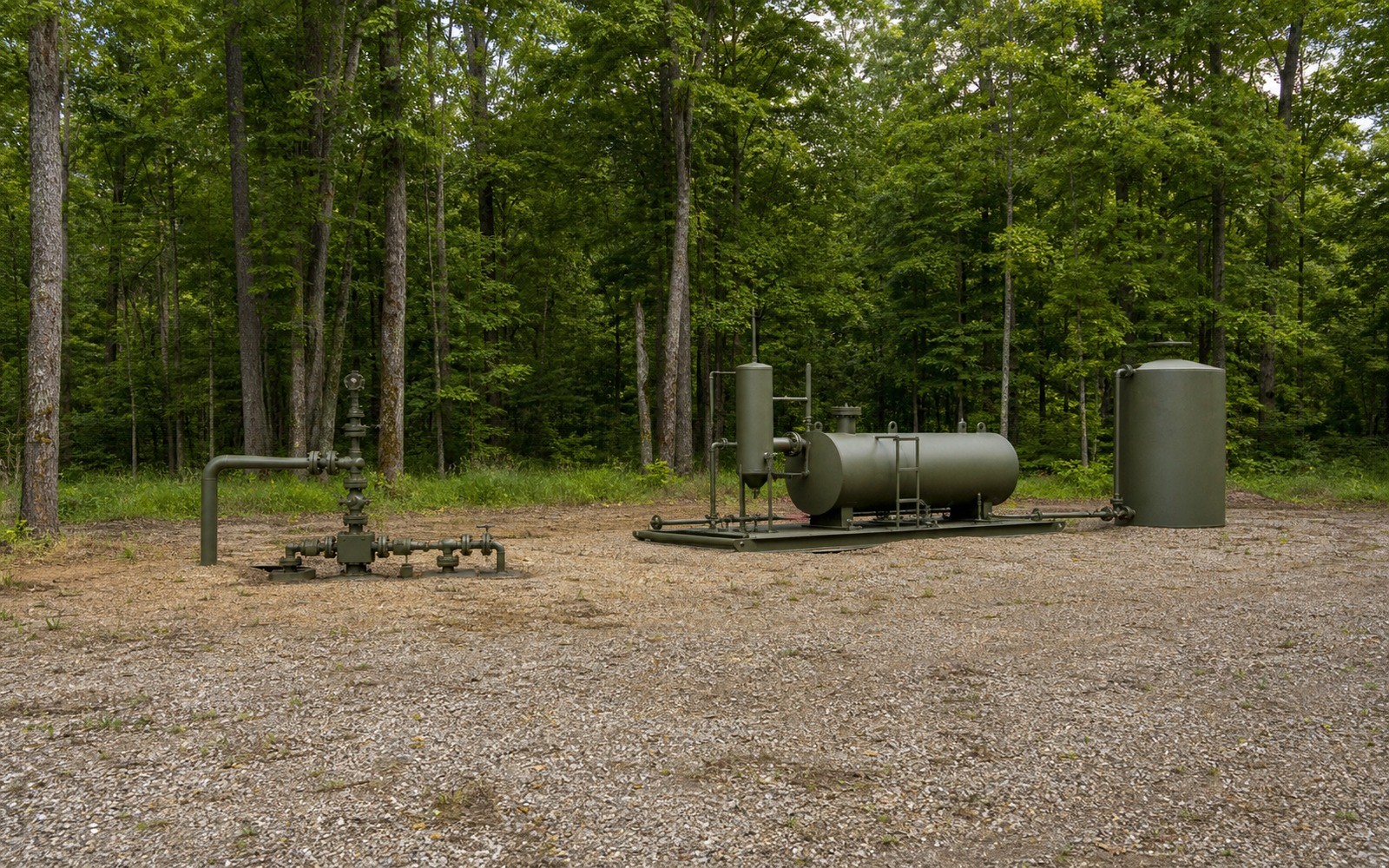
Most Antrim Shale interests in northern Michigan are no longer worth much on paper, and an estate filing still needs a defensible number for exactly that reason.
The Antrim was a biogenic gas play developed heavily through the 1990s, mostly in Otsego, Antrim, Montmorency, and surrounding counties, with shallow wells and gathering systems that are now three decades old. A large share of that inventory has moved into stripper-well status or has been plugged outright, and for heirs settling an estate, the honest answer is often that the interest is worth a modest, documented figure rather than a meaningful one.
That does not remove the obligation to produce a number. The IRS, a probate court, or a divorce settlement still requires a supportable valuation even when the underlying answer is small, and 'worthless' is not itself a defensible entry without records behind it.
Antrim wells decline slowly compared to modern shale plays, which is part of why so many are still nominally active decades later, but slow decline combined with low gas prices in this basin often means net revenue interest income measured in single-digit dollars per month per well. The file should show the well's current status through the Michigan DEQ's oil and gas database alongside whatever royalty statements the family retained.
Where statements are missing for long stretches, requesting a production history directly from the operator or pulling state-reported volumes fills the gap without requiring a full title search.
A meaningful number of Antrim wells are approaching or past their economic limit, and once a well is plugged, the mineral interest's remaining value is whatever future re-entry or offset development might justify, which for most tracts in this play is negligible absent new activity nearby. Noting plugged status, and the date of plugging where available from state records, keeps the file honest about what is actually being valued.
For a salvage-value appraisal, we document the last several years of actual receipts rather than projecting forward off an old decline curve, since Antrim curves this far into depletion rarely follow their original type curve cleanly.
Antrim leasing in the 1990s often split interests across large family groups, so a single heir's share of a single well can already be a small fraction before decline is even factored in. The documentation record for these should still trace the assignment chain back to the original lease, since a probate court or IRS examiner will want to see how the current fractional share was derived even on a low-dollar interest.
The basin can frame formations, product windows, decline shapes, well designs, spacing, takeaway, basis, deductions, operator behavior, and development pace. The subject remains the specific property schedule, lease, unit, wells, owner decimal, burdens, and effective date.
Producing wells, behind-pipe intervals, permits, offsets, undeveloped benches, recompletions, and broad operator inventory in the basin carry different levels of support. Each layer receives its own source date, timing assumption, production shape, burden, price case, probability, and discount.
Resolve these questions so the appraisal conclusion can be traced to a defined interest, date, method, and evidence set.
Yes. Estate and IRS filings require a supportable value for every interest listed, and a documented low or nominal figure is defensible in a way that an unsupported guess is not.
Michigan's oil and gas database, maintained by the state, lists well status by API number and is the most reliable public source for confirming whether a well is still active.
Antrim wells decline gradually and gas prices in this play have generally softened, so a smaller check usually reflects normal depletion rather than an error, though it is worth comparing against the operator's reported volumes.
Generally yes, since estates typically require disclosure of all mineral interests regardless of size, and your attorney or CPA can advise on any reporting thresholds that may apply.
Carry the same effective date, interest definition, evidence hierarchy, and limitations into these related appraisal procedures.
The Permian Basin spans multiple sub-basins and eras of production. See how a documentation-based appraisal organizes dense, layered comp data.