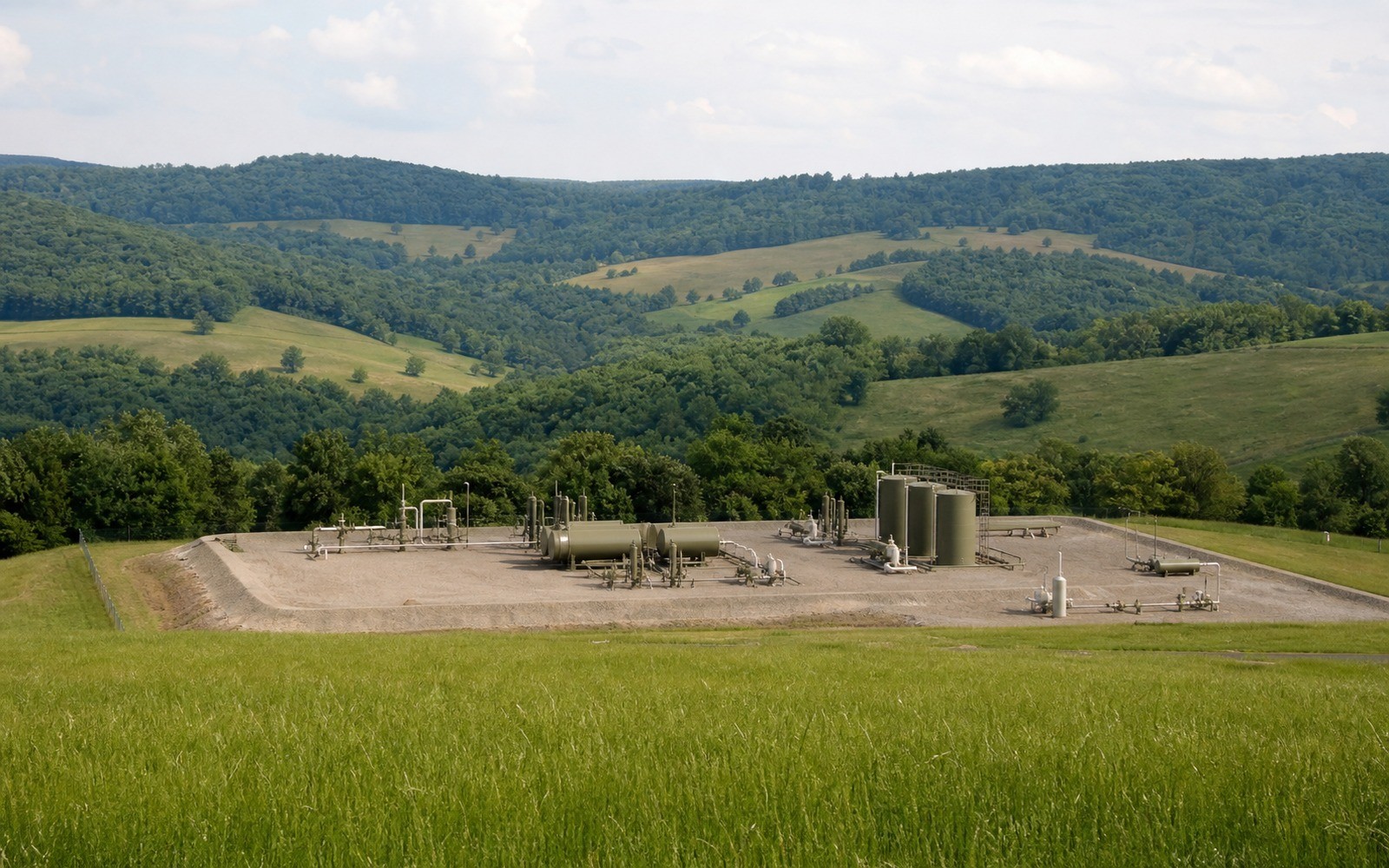
Eastern Ohio has been producing gas from the shallow Clinton Sandstone since long before the deep Utica Shale boom began, and both eras usually belong in the same file.
The Utica and Point Pleasant interval, developed intensively across Belmont, Carroll, Harrison, and Guernsey counties in eastern Ohio and extending into parts of Pennsylvania and West Virginia, sits several thousand feet beneath the much older Clinton Sandstone play that has produced modest volumes of gas from shallow wells since the mid-twentieth century in many of the same counties. A documentation file for an Ohio tract often needs to distinguish between decades-old Clinton production, still active on some tracts at low volumes, and the far larger, more recent Utica horizontal development that began around 2011.
Ohio's approach to mandatory pooling for horizontal Utica units, administered through the Ohio Department of Natural Resources, differs procedurally from neighboring Pennsylvania and West Virginia, and became a more actively used tool as horizontal unit sizes grew during the Utica boom. Where a tract's interest was established through a mandatory pooling order rather than a negotiated lease, that order should be the primary documentation source, similar to the approach used for force-pooled interests in Oklahoma's SCOOP and STACK plays.
A shallow Clinton Sandstone well and a much deeper Utica horizontal well on the same surface tract are typically unrelated in terms of operator, lease, and division order, even when both show up in the same family's records. Listing them as entirely separate production sources, rather than assuming the newer Utica lease supersedes or includes the older Clinton production, keeps the file accurate.
The Utica play includes a dry gas window in its eastern core counties and a wet gas or condensate window further west, with different product mixes and different price sensitivity between them. Confirming which window a specific tract falls in, using operator completion data through the Ohio Department of Natural Resources, keeps the documented commodity mix accurate rather than assumed from a neighboring county.
The basin can frame formations, product windows, decline shapes, well designs, spacing, takeaway, basis, deductions, operator behavior, and development pace. The subject remains the specific property schedule, lease, unit, wells, owner decimal, burdens, and effective date.
Producing wells, behind-pipe intervals, permits, offsets, undeveloped benches, recompletions, and broad operator inventory in the basin carry different levels of support. Each layer receives its own source date, timing assumption, production shape, burden, price case, probability, and discount.
Resolve these questions so the appraisal conclusion can be traced to a defined interest, date, method, and evidence set.
Many eastern Ohio counties produced from the shallow Clinton Sandstone for decades before the deep Utica Shale boom began around 2011, so it is common to find both an old shallow well and a newer deep Utica well on the same surface tract, typically under separate leases.
It means Ohio's Department of Natural Resources issued a pooling order to include a non-leased interest in a horizontal unit, setting participation terms in place of a negotiated lease; the pooling order should be the primary documentation source for that interest.
It depends on which window the tract falls in. The eastern core is primarily dry gas, while areas further west fall into a wet gas or condensate window with a different product mix, which operator completion data can confirm.
Not necessarily. The two are typically governed by separate leases and division orders even on the same tract, so they should be documented as distinct production sources rather than assumed to be combined.
Carry the same effective date, interest definition, evidence hierarchy, and limitations into these related appraisal procedures.
Michigan Antrim Shale interests are mostly late-life or marginal wells. Learn what a documentation-based salvage value review looks like for estate filings.