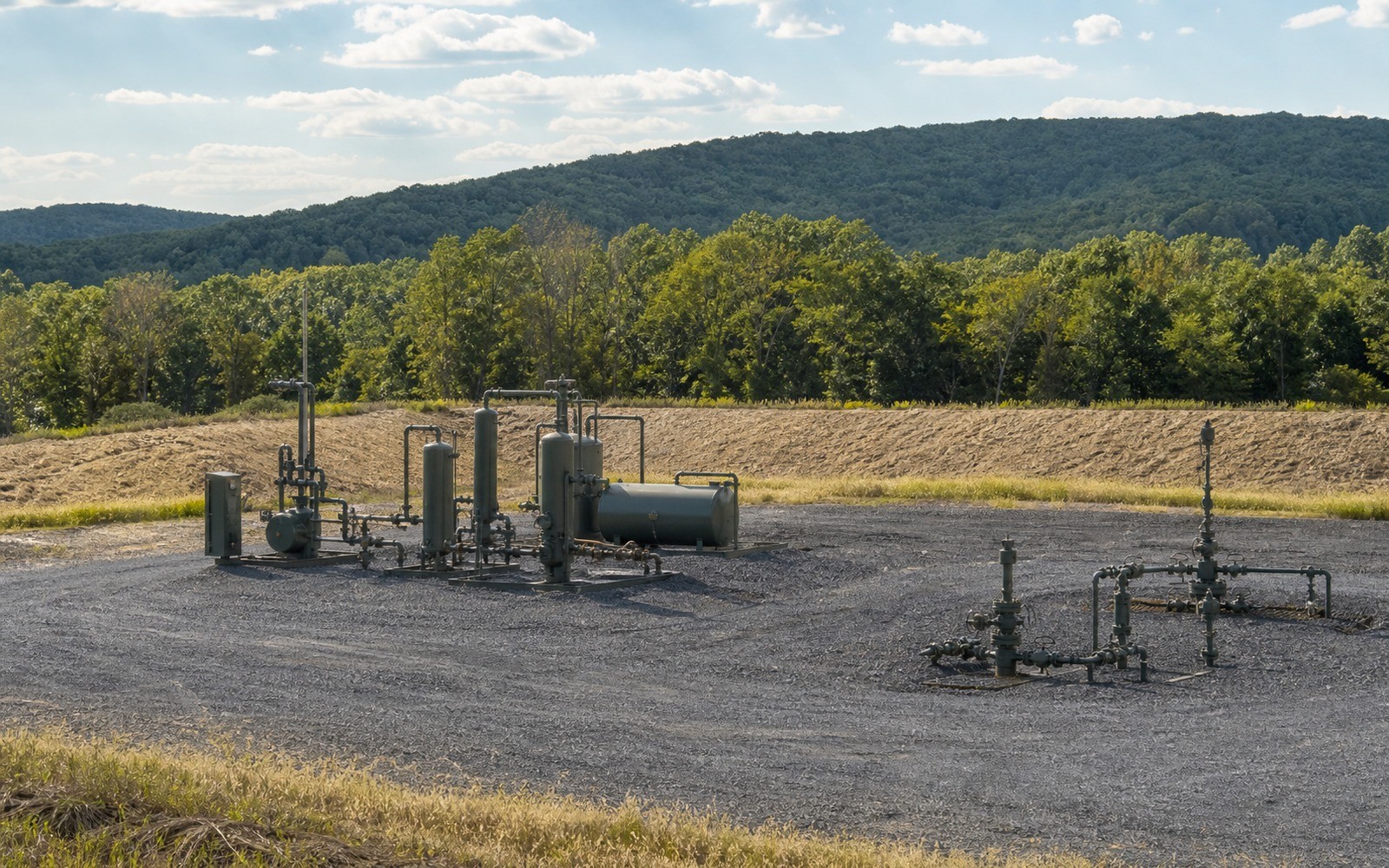
Two Marcellus interests with identical gross production can carry very different net royalty checks, and the difference almost always comes down to deductions.
Across Pennsylvania, West Virginia, and eastern Ohio, Marcellus royalty statements routinely net out gathering, compression, dehydration, and transportation costs before calculating the owner's payment, a practice that traces back to lease language written well before this play's development began in earnest around 2008. For a documentation-based appraisal, gross wellhead value and net paid royalty are two different numbers, and a defensible file needs to show both, not just what arrived in the mailbox.
Older rural Pennsylvania and West Virginia leases, some signed decades before Marcellus drilling began for entirely different shallow production, frequently lack the explicit no-deduction language that became more common in leases negotiated after deduction disputes reached state courts in the 2010s. Pulling the actual lease, or its recorded memorandum, and reading the royalty clause is a more reliable way to explain a check's size than assuming the deduction is standard practice.
A deduction-adjusted income approach starts with the operator's reported gross production and wellhead price, then documents the specific costs deducted line by line as shown on the royalty statement, rather than working backward only from the net check. This matters for estate and IRS purposes because a valuation based purely on recent net payments can understate the interest if deductions have been unusually high in a given period, or overstate it if a temporary deduction pause is currently in effect.
Pennsylvania and West Virginia both maintain public production databases by well that can be used to confirm gross volumes independent of the operator's own reporting.
Mineral ownership in this region is often split among heirs going back multiple generations of family farmland, sometimes with severed mineral estates dating to the early twentieth century, well before any gas company was involved. Confirming the current owner's fractional share through the county's deed and probate index remains a necessary step before any income figure is applied.
The basin can frame formations, product windows, decline shapes, well designs, spacing, takeaway, basis, deductions, operator behavior, and development pace. The subject remains the specific property schedule, lease, unit, wells, owner decimal, burdens, and effective date.
Producing wells, behind-pipe intervals, permits, offsets, undeveloped benches, recompletions, and broad operator inventory in the basin carry different levels of support. Each layer receives its own source date, timing assumption, production shape, burden, price case, probability, and discount.
Resolve these questions so the appraisal conclusion can be traced to a defined interest, date, method, and evidence set.
Post-production cost deductions for gathering, compression, dehydration, and transportation are common in this play and are typically itemized on the royalty statement; the original lease language determines whether these deductions are permitted.
Pennsylvania and West Virginia both publish well-level production data through their state oil and gas offices, which can be compared against operator-reported figures.
Yes. We are not attorneys, and questions about whether specific deduction language is enforceable are best directed to your own attorney or CPA.
Severed mineral estates in this region often date back many decades and were divided among descendants long before Marcellus drilling began, which is why a documentation file traces the ownership chain through probate and deed records.
Carry the same effective date, interest definition, evidence hierarchy, and limitations into these related appraisal procedures.
Utica Shale interests sit under decades of legacy Clinton Sandstone wells and Ohio's distinct pooling rules. See how that layered history shapes documentation.