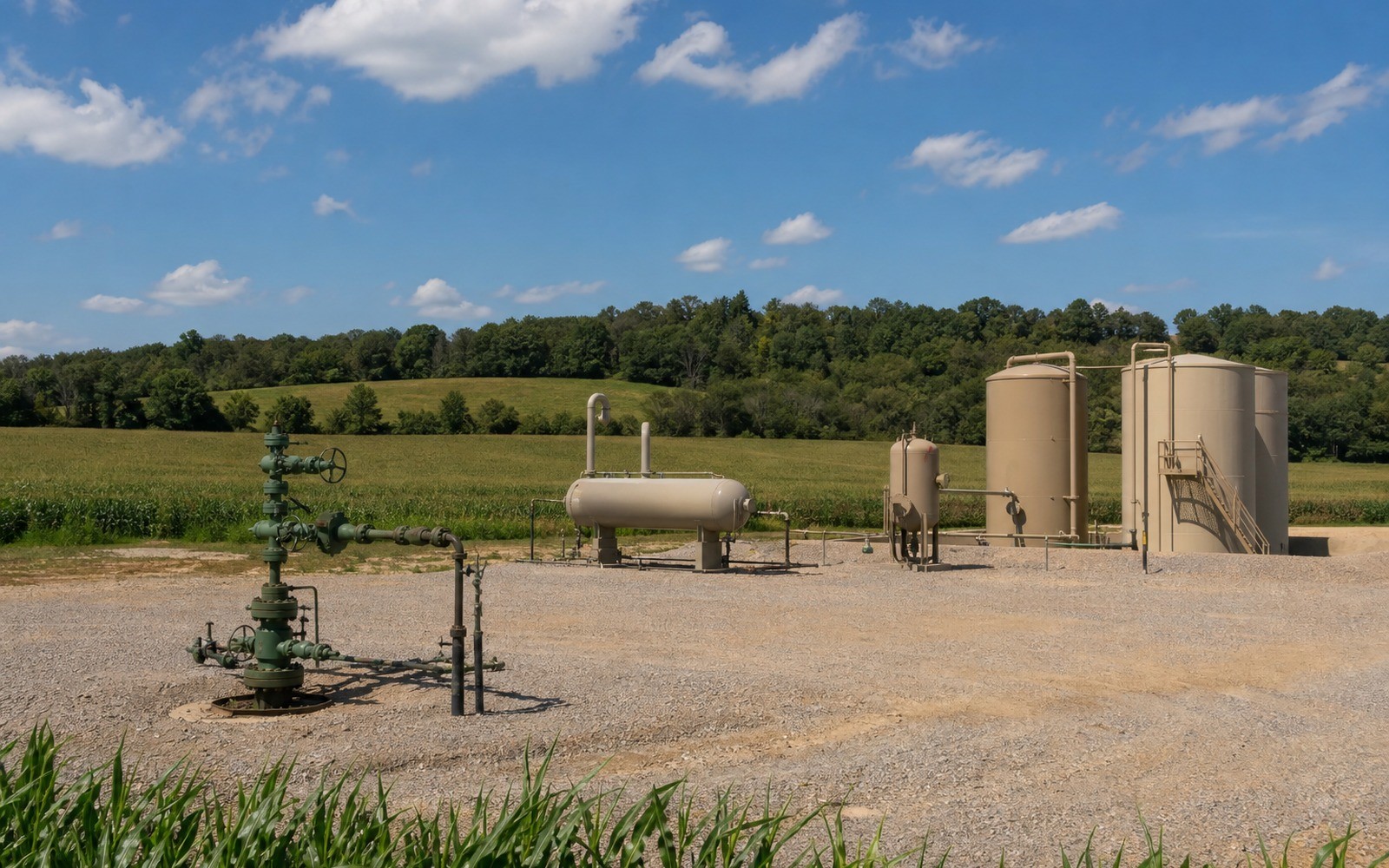
The Smackover is where two very different stories meet: century-old conventional oil leases and a brand new lithium brine industry drawing on the same formation.
Producing oil since the 1920s across southern Arkansas, northern Louisiana, and parts of Mississippi and East Texas, the Smackover Formation carries some of the oldest continuously active lease chains we document, many originating before modern courthouse recording standards existed. In just the last several years, the same brine that has produced alongside Smackover oil for a century has become the target of a growing lithium extraction industry, particularly in the Arkansas Smackover, adding an entirely new category of interest to some of these same century-old tracts.
Interests with a Smackover lease dating to the 1920s through 1940s sometimes have assignment chains with gaps at the county level, either from incomplete early recording or from documents lost over decades. Family-retained abstracts, when they exist, often fill these gaps more reliably than county records alone, and where neither source resolves a link, that gap should be noted explicitly in the documentation file rather than assumed away.
A Smackover mineral interest's oil and gas rights and its brine rights are not automatically the same thing, and how a specific old lease treats produced brine, historically viewed as an oilfield byproduct rather than a resource in its own right, varies by lease language written decades before lithium extraction was a consideration. For any interest where lithium brine development is active or proposed nearby, this distinction belongs in the documentation file, alongside a note that legal interpretation of older brine language should go through an attorney rather than be assumed from the appraisal file.
Aside from the emerging brine activity, most Smackover oil production today reflects a century of gradual, mature decline rather than new drilling, so a documentation file for the conventional oil and gas interest should be built on recent trailing production from Arkansas Oil and Gas Commission or Louisiana Office of Conservation records rather than any assumption of renewed drilling activity.
The basin can frame formations, product windows, decline shapes, well designs, spacing, takeaway, basis, deductions, operator behavior, and development pace. The subject remains the specific property schedule, lease, unit, wells, owner decimal, burdens, and effective date.
Producing wells, behind-pipe intervals, permits, offsets, undeveloped benches, recompletions, and broad operator inventory in the basin carry different levels of support. Each layer receives its own source date, timing assumption, production shape, burden, price case, probability, and discount.
Resolve these questions so the appraisal conclusion can be traced to a defined interest, date, method, and evidence set.
Not automatically. Whether an old lease's brine language extends to lithium extraction depends on the specific lease terms written decades before lithium was a consideration, and this is a legal question best directed to your attorney.
County records combined with any family-retained abstracts are the usual sources; early twentieth-century recording in this region was less standardized, so gaps are common and should be noted rather than assumed resolved.
Most current production reflects a century of gradual decline rather than significant new conventional drilling, though this varies by specific county and lease.
Where relevant activity is active or proposed nearby, it should be noted as a separate consideration from conventional oil and gas value, with legal questions about brine rights directed to your attorney.
Carry the same effective date, interest definition, evidence hierarchy, and limitations into these related appraisal procedures.
The Tuscaloosa Marine Shale saw speculative leasing with limited follow-through drilling. See what a documentation-based appraisal looks like for this dormant play.